
Security Council Warns Hormuz Crisis Is Testing Global Maritime Order
By ATN News Team
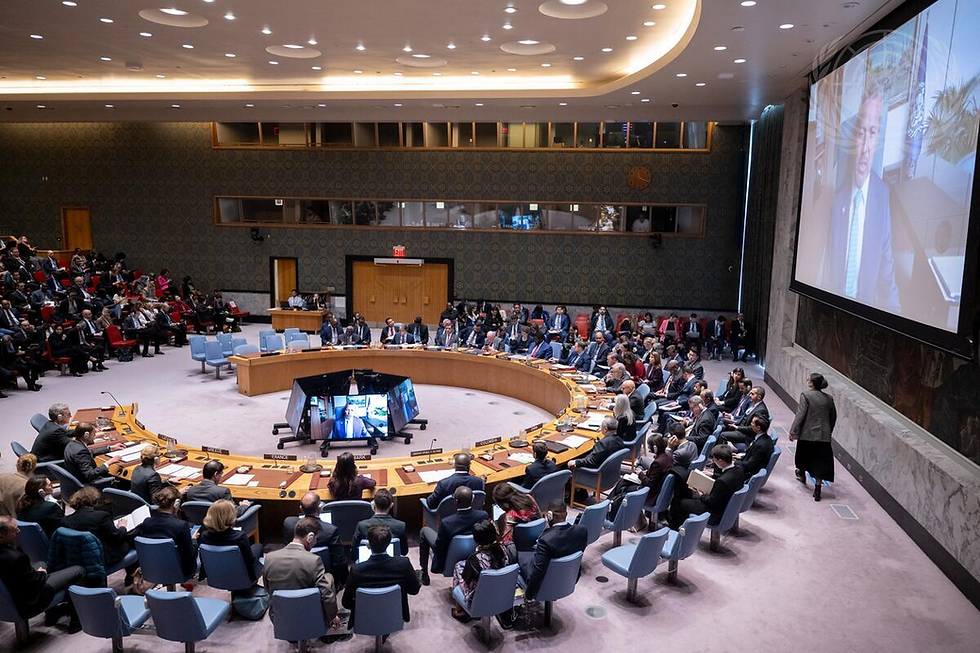
UNHQ, New York: The Security Council turned Monday to one of the world’s most vulnerable pressure points, warning that the closure and militarization of key maritime routes, especially the Strait of Hormuz, is no longer a regional dispute but a direct test of the international system’s ability to protect global trade, energy flows and freedom of navigation.
The high-level open debate, convened by Bahrain during its April presidency of the council, focused on the safety and protection of waterways in the maritime domain. But the center of gravity was unmistakable: Hormuz, the narrow Gulf passage through which a major share of the world’s energy exports normally moves, has become a strategic choke point in the aftermath of the wider Iran conflict.

Secretary-General António Guterres told the council that safeguarding waterways is a “test” of the international order and called for full respect for international law, including the U.N. Charter and the law of the sea. His message was blunt: maritime insecurity does not stay at sea. It reaches ports, energy markets, food prices, insurance costs and the daily lives of people far from the conflict zone. (United Nations Press)

Bahrain’s Foreign Minister Abdullatif bin Rashid Al Zayani, chairing the meeting, warned that silence over the obstruction of navigation risks normalizing breaches of international law. He said the use of Hormuz as leverage threatens not only Gulf states but the wider global economy. The warning carried extra weight because Bahrain, a Gulf state and current council president, framed the issue not as a narrow regional grievance but as a challenge to collective security.

The International Maritime Organization gave the council the operational picture behind the diplomacy. IMO Secretary-General Arsenio Dominguez said maritime security rules have evolved since the 1980s, but the current crisis has exposed the limits of regulation when armed conflict spills into shipping lanes. In a briefing before the council meeting, the IMO said there was “no safe transit anywhere in the Strait of Hormuz,” citing verified attacks on vessels, detained ships, seafarer deaths and thousands of crew members trapped in the Gulf. (International Maritime Organization)

The United States used the debate to press Iran directly. U.S. Ambassador Mike Waltz said the Strait of Hormuz was not Iran’s “bargaining chip,” arguing that freedom of navigation through the waterway has broad international backing. The U.S. position reflected Washington’s wider effort to keep diplomatic and military pressure on Tehran while seeking support from other states affected by the disruption. (U.S. Mission to the United Nations)
The debate followed an earlier Security Council failure this month, when Russia and China vetoed a draft resolution aimed at restoring freedom of navigation through the Strait of Hormuz. That vote exposed the familiar paralysis inside the council: broad concern over the economic and security fallout, but no agreement among the permanent members on how to respond or how sharply to confront Iran. (Eurasia Review)
For smaller and trade-dependent countries, the issue is not theoretical. A joint statement by Fiji, Jamaica, Malta and Singapore stressed the importance of transit passage under international law, reflecting the anxiety of states whose economies depend on open sea lanes even when they are far from the Gulf. (Ministry of Foreign Affairs)
The council debate also showed how maritime security has moved beyond piracy and port protection. Today’s threats include mines, drones, missile strikes, state coercion, illegal fees, detained vessels and proxy warfare. The sea, once treated as a highway of globalization, is increasingly becoming another arena of geopolitical pressure.
No immediate council action emerged Monday. That was the point, and the problem. The Security Council could diagnose the danger, but it remained divided over the remedy. For now, Hormuz stands as both a maritime crisis and a diplomatic mirror: everyone wants the waterway open, but not everyone is prepared to pay the same political price to make that happen.