
NY-12’s Democratic Primary Is Local, but the Foreign Policy Stakes Are Global


By Ahmed Fathi
UWS, New York: My work as a United Nations correspondent and global affairs analyst does not usually place me inside local congressional primaries. I spend most of my time following diplomacy, wars, vetoes, negotiations, multilateral failure, and the occasional moment when the international system remembers why it was built. NY-12
But this time is different.
I have lived and worked in New York’s 12th Congressional District for close to three decades, and this race is unfolding in my own civic backyard. It is not just another Democratic primary. It is a contest to succeed Rep. Jerry Nadler in one of the most politically literate districts in the country, a district where local politics and global affairs often sit at the same dinner table.

NY-12’s Democratic primary is local, but its foreign policy stakes are global. From the Upper West Side and Lincoln Square to the Upper East Side, Yorkville, Carnegie Hill, Turtle Bay, Midtown, Hell’s Kitchen, Chelsea, Gramercy, Murray Hill, Kips Bay, Roosevelt Island, and Stuyvesant Town, this area is a Manhattan district where global affairs are never far from daily life. Israel and Gaza, Ukraine, China, Iran, the United Nations, and campaign money are not abstract issues here. They move through synagogues, churches, mosques, and campuses; diplomatic circles; donor networks; immigrant communities; civic groups; and family conversations. NY-12 deserves more than slogans from the candidates asking to represent it.
So while affordability, housing, public safety, immigration, health care, and democracy are central to the race, foreign policy deserves its own serious examination. The topic is not a side issue. The issue serves as a test of judgment.
The candidates now asking NY-12 voters for their trust present different theories of representation. Micah Lasher is running as the experienced institutional fighter. Alex Bores as the future policy technocrat. Jack Schlossberg as the generational messenger. George Conway as the constitutional anti-Trump warrior. Nina Schwalbe as the public-health and human-rights reformer. Laura Dunn is a civil-rights and survivor-justice advocate.
All of those identities matter. But in this district, the harder question is whether each candidate can explain how America should use power in a world where the old order is fraying and moral slogans are no substitute for policy.

Micah Lasher offers the most familiar form of Democratic institutional seriousness. His platform frames foreign policy around restoring lawful and effective U.S. leadership, rebuilding alliances, strengthening NATO and other democratic partnerships, reasserting congressional authority through the War Powers Resolution, prioritizing diplomacy, and reassembling the State Department and USAID after Trump-era cuts. He also ties foreign policy to climate cooperation, calling for the United States to rejoin international climate efforts. (Lasher for Congress)
Lasher’s strength is that he understands institutions. He speaks the language of Congress, oversight, constitutional authority, and executive restraint. In NY-12, that matters. This constituency is a district that has long valued serious lawmakers, not just loud ones.
But Lasher’s Middle East positioning is less fully developed in public than his broader foreign-policy framework. His platform gives significant attention to combating antisemitism and increasing security for houses of worship and community centers, an urgent issue in a city with one of the world’s largest Jewish populations. (Lasher for Congress) But voters looking for a fuller statement on Gaza, Palestinian rights, U.S. leverage over Israel, humanitarian law, and the future of the two-state solution may want more clarity.
Lasher appears to be occupying the mainstream pro-Israel liberal lane: institutional, community-rooted, anti-Trump, pro-democracy, and careful. That may be politically durable. But in 2026, careful is not always enough.

Alex Bores has the most detailed Middle East policy among the leading candidates reviewed. His platform states a clear commitment to a two-state solution, defined as a secure and democratic Israel alongside a sovereign and independent Palestinian state. It recognizes the security needs and self-determination claims of both peoples, rejects any governing role for Hamas and other armed groups, and argues that denying Palestinian statehood does not serve long-term Israeli security.
Bores also goes beyond familiar peace process language. He says U.S. law should apply to Israel as it does to other partners, that American weapons must not be used in ways that violate U.S. Law or values should ensure that Leahy Law enforcement is consistent and that violent extremist settlers face sanctions.
That is a serious attempt to build a center-left foreign policy position for a changed Democratic electorate: pro-Israel, pro-Palestinian statehood, pro-humanitarian law, and pro-accountability. Whether voters agree with every line or not, Bores has done the work of putting substance on paper.
His broader value is also future-facing. Bores strongly identifies with AI regulation and technology policy, which is no longer a domestic-only issue. Artificial intelligence is now a national security question, a labor question, a democracy question, and a global governance question. His campaign has drawn attention from the AI industry and critics of AI regulation, turning NY-12 into part of a larger national fight over how technology power should be governed. (The Wall Street Journal)
Bores offers a credible option for NY-12 voters who want foreign policy to encompass not just Israel and Gaza but also China, AI, cyber power, and the future economy.
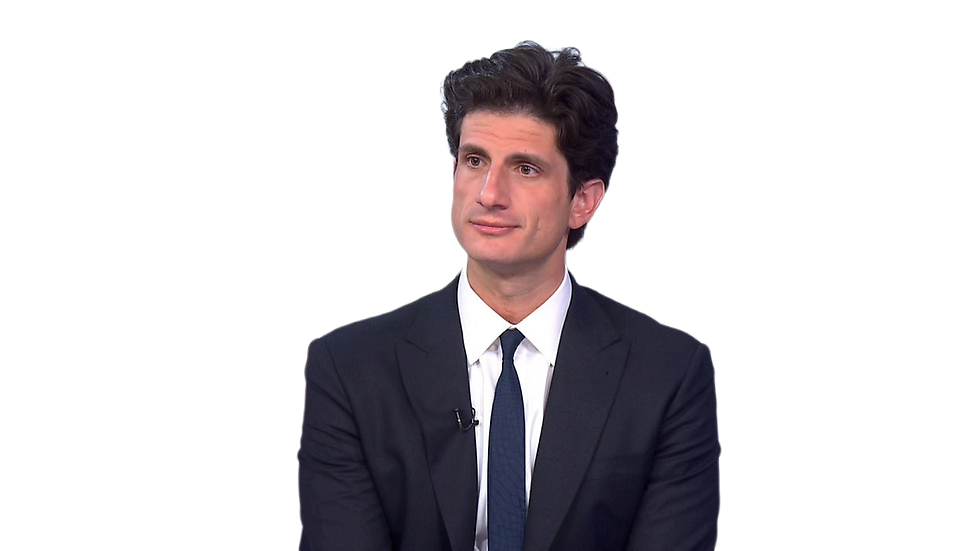
Jack Schlossberg brings something different: attention, symbolism, and generational voltage. His campaign has emotional force. He is not running only on policy; he is running on the promise that politics can feel alive again.
That is not nothing. In a Democratic Party often trapped between fear and fatigue, energy matters. But NY-12 should ask more of every candidate, especially one carrying a famous name into a district that knows political history almost too well.
On foreign policy, Schlossberg’s public positioning appears less complete than Bores’ or Schwalbe’s. Reporting by the Jewish Insider said he supports funding for Iron Dome but is open to restricting U.S. aid to Israel, including opposing U.S. funding for offensive weapons connected to the Iran war and supporting restrictions on aid used in connection with the occupation of the West Bank and East Jerusalem. (Jewish Insider) His campaign has also emphasized security funding for Jewish houses of worship and institutions amid rising antisemitism.
That combination places him in an intriguing, politically delicate space: pro-Israel security, but open to limits on offensive support and occupation-linked aid. It may appeal to younger Democrats and some liberal Jewish voters. But the challenge is depth. Voters should know not only what he opposes but also what doctrine he would bring to Congress.
In NY-12, a biography can provide access. It cannot be the room. This race should not become Camelot on the Hudson.

George Conway has the clearest anti-Trump message in the field. His website is built around taking back democracy, defeating Trump’s majority and restoring the rule of law. He presents himself as a lawyer who fought Trump in the courts and media and now wants to do it in Congress. (George Conway)
That message is powerful, especially at a time when constitutional boundaries, prosecutorial independence, executive power, and democratic norms are under pressure. A serious rule-of-law candidate has obvious value.
But foreign policy cannot remain implied. Rule of law abroad means something specific: war powers, arms transfers, human-rights conditions, treaty obligations, U.N. funding, sanctions, accountability for allies and adversaries alike, and limits on presidential military action. Conway’s campaign has not yet presented a sufficiently developed Middle East or foreign-policy platform. In NY-12, “I know how to fight Trump” is a strong opening argument. It is not a full governing agenda.

Nina Schwalbe offers the most explicitly progressive and multilateral foreign-policy approach in the field. Her platform is built around “healthy people, healthy democracy,” but her foreign-policy instincts are broader than public health. She emphasizes accountability, international law, humanitarian protection, and U.S. re-engagement with global institutions. Her platform calls for government performance measures, community scorecards, and transparent constituent services, reflecting a systems-oriented view of governance.
In the Middle East, Schwalbe’s position is the most human-rights-forward. She supports an immediate and permanent ceasefire; humanitarian access; accountability for Hamas and Israel; conditioning U.S. support for Israeli compliance with international law; and preserving defensive systems such as the Iron Dome while restricting certain offensive weapons. Her broader foreign policy outlook includes reasserting congressional war powers, re-engaging with the United Nations and global health institutions, restoring foreign assistance, and treating international law as more than diplomatic wallpaper.
Her strength is moral clarity. Her risk is political reach. NY-12 includes many voters for whom Israel is not abstract but personal, historical, and immediate. Schwalbe must persuade those who disagree and show that accountability and security can coexist.

Laura Dunn brings a different background: civil rights, victim rights, and survivor advocacy. Her campaign biography describes her as a nationally recognized civil and victim rights attorney running for Congress. (Laura Dunn for Congress) That provides her a meaningful values frame: institutions should protect people, not silence them; law should serve the vulnerable, not only the powerful.
But on foreign policy and the Middle East, her public-facing campaign material remains too thin. In many districts, that might pass. In NY-12, it should not. A candidate who wants to represent this seat needs a visible position on Israel, Gaza, Iran, Ukraine, China, the United Nations, human rights, and U.S. military power. Silence may be strategic, but it is not leadership.
Then there is the question of political money.
In NY-12, funding linked to Israel policy carries particular significance. It should be taken seriously, not dismissed as irrelevant. Money is not the same as policy, but capital can shape access, pressure, expectations, and perception.
Based on the sources reviewed, I found no confirmed direct AIPAC PAC funding to the six candidates at this stage. Track AIPAC lists Micah Lasher with a $0 Israel-lobby total and notes a J Street endorsement. (Track AIPAC) Jewish Insider also reported that J Street had “primary approved” Bores, Lasher, and Schlossberg, allowing its members to contribute to all three through its portal, and quoted J Street saying they were aligned with its pro-Israel, pro-peace, and pro-democracy positions. (Jewish Insider)
Bores has said he does not take PAC money, with his site and campaign materials emphasizing his refusal of PAC support, except for union PACs. (Facebook) Lasher says he will continue to refuse corporate PAC money. (Lasher for Congress) Schlossberg has positioned himself against corporate PAC money. Conway, Schwalbe, and Dunn require continued campaign-finance scrutiny as filings and outside spending develop.
The standard here should be simple: transparency. NY-12 voters do not need innuendo. They need disclosure, consistency, and a clear answer about whether donors, outside groups, or fear of being targeted shape any candidate’s foreign-policy positions.
This primary is local. It is about rent, subways, safety, schools, migrants, small businesses, seniors, scaffolding, and whether residents feel heard by Washington. But it is also global because NY-12 is global. The district sits in the city that hosts the United Nations. It contains communities connected to nearly every major conflict and diplomatic debate on earth. It deserves a representative who understands that foreign policy is not an elite hobby. It is local life by other means.
NY-12 does not need slogans dressed as policy. It does not need a biography in place of judgment or branding in place of courage. It needs clarity on Israel and Gaza, seriousness on Ukraine and NATO, discipline on Iran and China, respect for international law, and honesty about political money.
This is not Camelot on the Hudson.
It is a test of whether one of America’s most politically sophisticated districts can demand more than applause lines from the people asking to represent it.
** About the Author: Ahmed Fathi is an internationally syndicated journalist, United Nations correspondent, global affairs analyst, and human rights commentator. He writes about diplomacy, multilateralism, power, public freedoms, and the politics shaping our global future.