
No Peace Agreement Survives an Empty Stomach: U.N. Peacebuilding Debate Turns to Jobs, Trust and Prevention


By Ahmed Fathi
UNHQ, New York: The United Nations opened its first Peacebuilding Week on Monday with familiar language: urgency, partnership, prevention, and impact. But behind the diplomatic message was a harder question the organization has struggled to answer for two decades: Can the U.N. prove that peacebuilding prevents conflict before the world is forced to pay for war?
The briefing marked the start of Peacebuilding Week 2026, held from June 22 to 26, and the 20th anniversary of the Peacebuilding Commission and the Secretary-General’s Peacebuilding Fund. Senior U.N. officials and ambassadors presented the week as a milestone for prevention and sustaining peace.
Yet the briefing also exposed the weakness of the peacebuilding agenda. Everyone agrees prevention matters. Everyone says it is cheaper than war. Everyone supports national ownership, stronger institutions, women’s and youth inclusion, and better financing. The problem is that the U.N. has been saying much of this for 20 years.
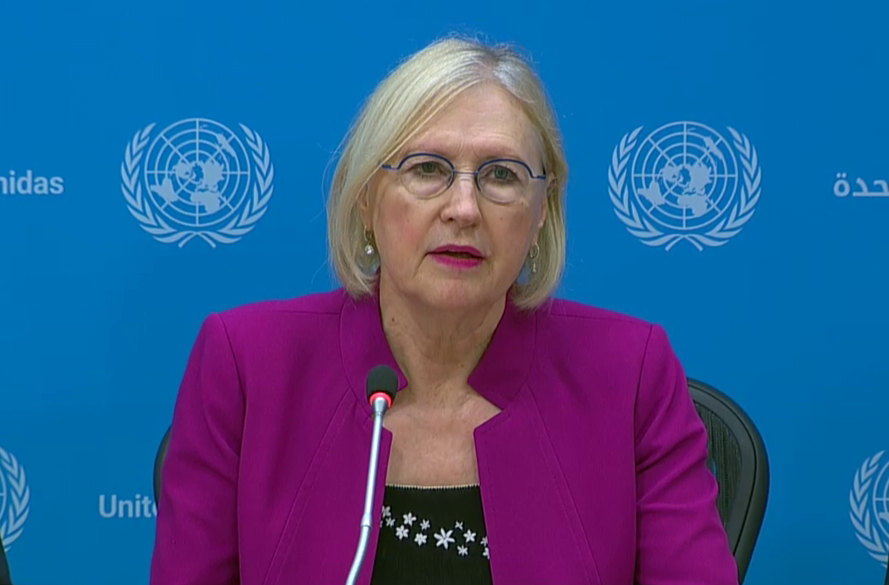
Elizabeth Spehar, assistant secretary-general for peacebuilding and peace support, made the case plainly. In a world of growing conflicts, prolonged wars, and forced displacement, she said peacebuilding is “not optional.” When grievances fester, exclusion becomes normal, and weak institutions remain weak; violence often follows, she warned.
That argument is difficult to dispute. It is also difficult to fund.
Spehar acknowledged that development assistance is being cut, needs are growing, and peacebuilding remains under-resourced. Asked whether the greatest obstacle is funding, political will, coordination, or trust, she did not choose one.
“Yes, yes, and yes,” she said.
It was perhaps the most honest moment of the briefing. Peacebuilding depends on predictable money, early political will, a coordinated U.N. system, and trust between governments, societies, and international institutions. Currently, all four are under pressure.
Spehar also described successful prevention as “the dog that didn’t "bark"—the crisis avoided, the war that never started, the collapse that never reached the evening news. The phrase captured the political problem. If peacebuilding works, it is often invisible. If it fails, the Security Council takes over, cameras arrive, and emergency money suddenly appears.
That is the cruel economy of the international system: war gets urgency; prevention gets speeches.

Ambassador Omar Hilale of Morocco, chair of the Peacebuilding Commission, gave the briefing its strongest human line: “No peace agreement survives an empty stomach.”
The point cut through the institutional language. Peace cannot rest on paper agreements alone; jobs, wages, dignity, and opportunity matter. But it also exposed the weakness of the current model: if peacebuilding depends on development and reconstruction, it cannot remain a small diplomatic file inside the U.N.
Hilale also highlighted Morocco’s role in U.N. peace operations and said regional organizations are not “spectators of peace” but “first architects.” In Africa, that argument is relevant — but regional ownership should not become a polite excuse for the wider international community to limit its responsibility.

Egypt’s ambassador, Ihab Moustafa, framed peacebuilding as a test of U.N. coherence. He said it is not a “niche agenda” but central to prevention, sustaining peace and development. In theory, that is precisely what peacebuilding should be. In practice, the U.N. still struggles to integrate its peace and security, humanitarian, development, and human rights arms into a single, cohesive system.
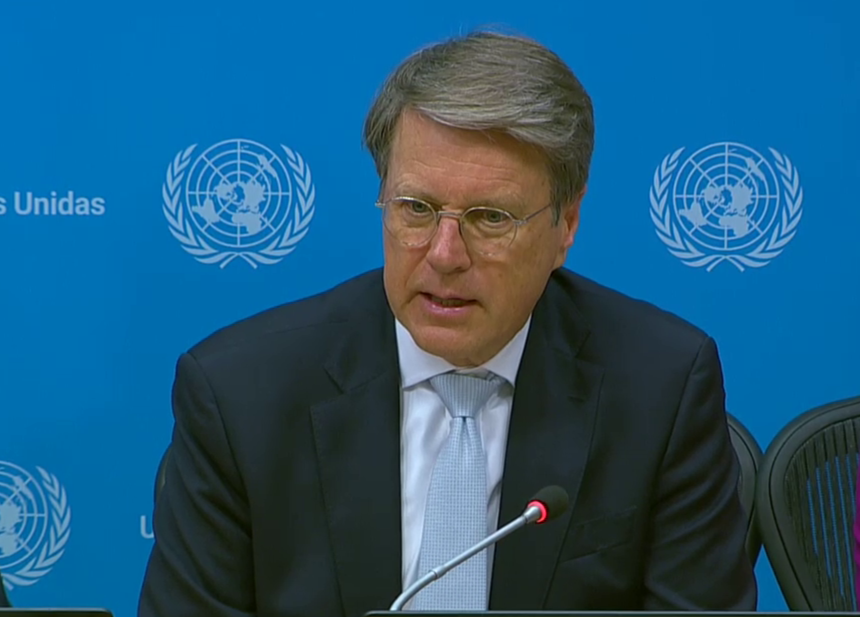
Slovenia’s ambassador, Samuel Žbogar, noted that consensus at the U.N. is eroding as more resolutions are being adopted by vote. The U.N. presented the 2025 Peacebuilding Architecture Review, adopted by consensus in both the General Assembly and Security Council, as an achievement.
Consensus, however, is not implementation.
Asked what benchmarks should show whether the review is moving from language to results, Žbogar pointed to practical tests: more countries voluntarily coming to the Peacebuilding Commission, stronger cooperation with international financial institutions, better transitions from peacekeeping to peacebuilding, more Security Council requests for PBC advice, and more national prevention strategies.
The U.N. does have examples to defend its case. Spehar cited Mauritania, São Tomé and Príncipe, and Papua New Guinea as countries working on prevention before collapse. Hilale said the PBC is moving from post-conflict recovery toward earlier engagement with countries facing signs of fragility. Moustafa pointed to Liberia and Sierra Leone as examples where long-term support helped countries move from war toward more stable political processes.
Still, the broader picture remains uncomfortable.
Twenty years after the Peacebuilding Commission was created, the U.N. is still asking the world to take prevention seriously, fund it predictably, and measure it honestly.
Peacebuilding Week may give the agenda visibility. But unless it changes behavior, it risks becoming another annual ritual in a building already full of them.
The test is not whether diplomats agree that peacebuilding matters. They already do.
The test is whether they will use it early, fund it seriously, and support it politically before the next country slides from warning signs into war.